Still Counting on Fingers? A 4-Week Plan for Addition Facts
The problem
You write 5 + 3 on the board. One child holds up five fingers, then three more, then counts all of them: "one, two, three, four, five, six, seven, eight." The answer is right, but it took a long time. On the next problem the child loses track halfway and starts again. By the end of a worksheet the child is tired, and the answers that came out of a miscount are wrong.
If this sounds like your class (or your kitchen table): counting on fingers is a normal stage. The trouble starts when a child stays there, because every new skill that needs addition, from subtraction to adding bigger numbers, gets slower and harder.
Why it happens
Counting everything from one is the first way almost every child learns to add. Many simply have not been shown a faster way that they trust. Telling a child to "just remember it" rarely helps, because a long list of facts with no pattern is hard to remember.
What does help is teaching a few strategies, one at a time, so that each fact can be worked out quickly from something the child already knows. After enough practice, the strategy turns into a fact the child simply knows.
The plan: 10 minutes a day for 4 weeks
Each day has the same three parts:
- Warm-up (2 minutes). Say three or four facts from this week's group out loud and let children answer together. Ask one child, "How did you know?"
- Practice (5 minutes). Children work on the worksheet for this week. Half a page a day is enough; finish the page tomorrow.
- Check (3 minutes). Check with the answer key on page 2 of the PDF. Children circle any fact they got wrong and say the strategy that would have helped.
Teaching kindergarten? Stay with the number line and ten frame sheets and facts up to 5, and take each step more slowly.
Week 1Plus 1 and plus 2 (counting on)
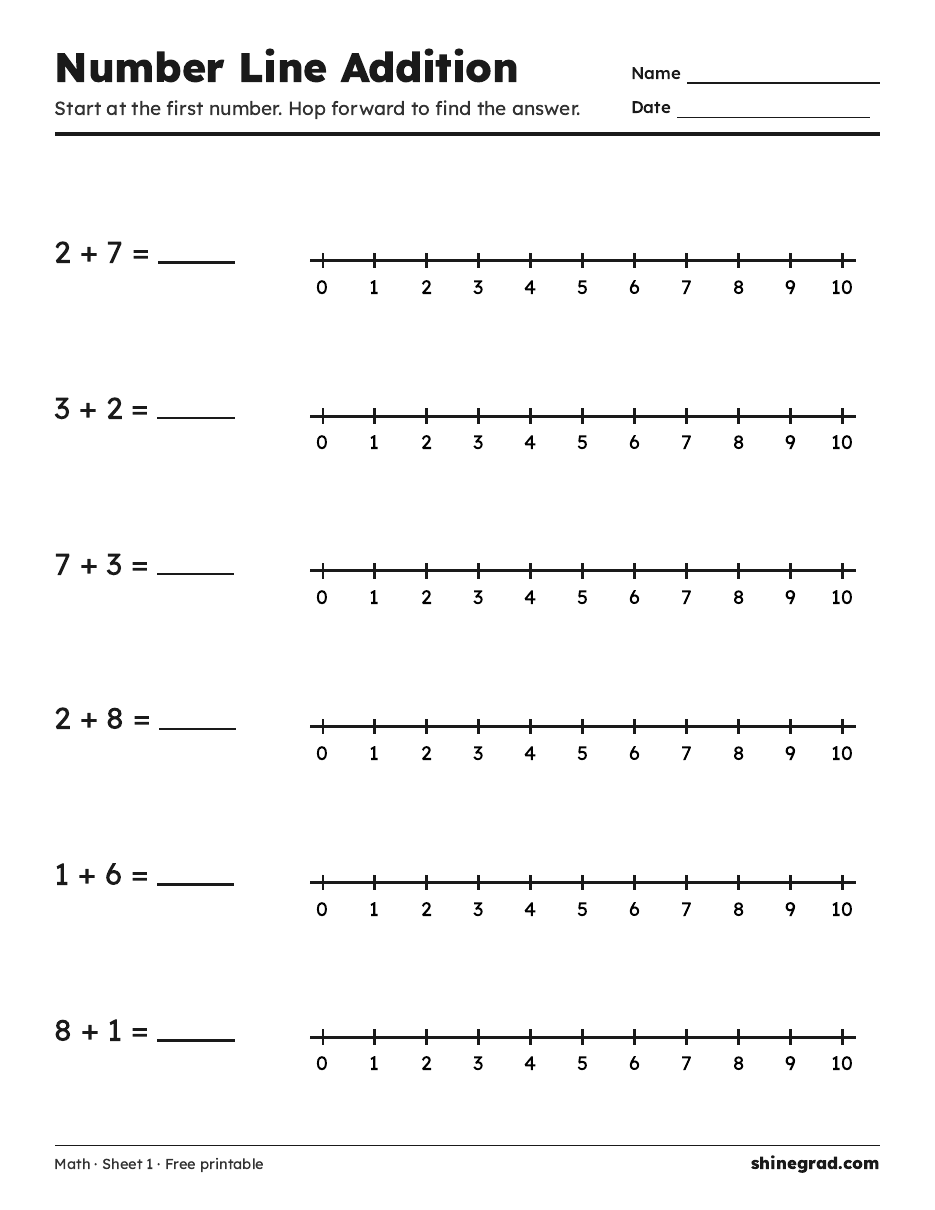
Teach the first shortcut: start at the bigger number and count on. For 7 + 2, the child says "seven" and counts "eight, nine". No more starting from one. A number line makes the idea visible: put a finger on 7 and make two hops.
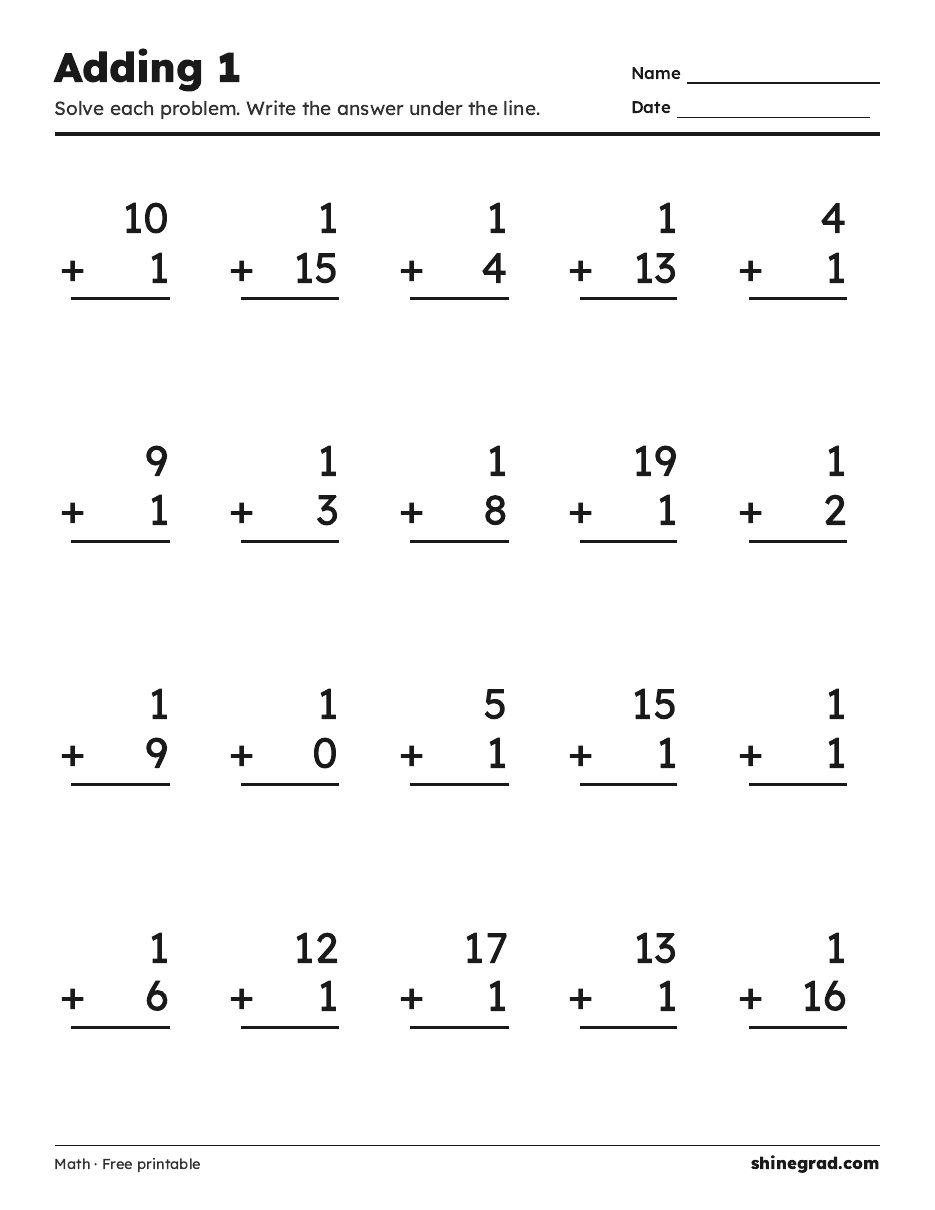
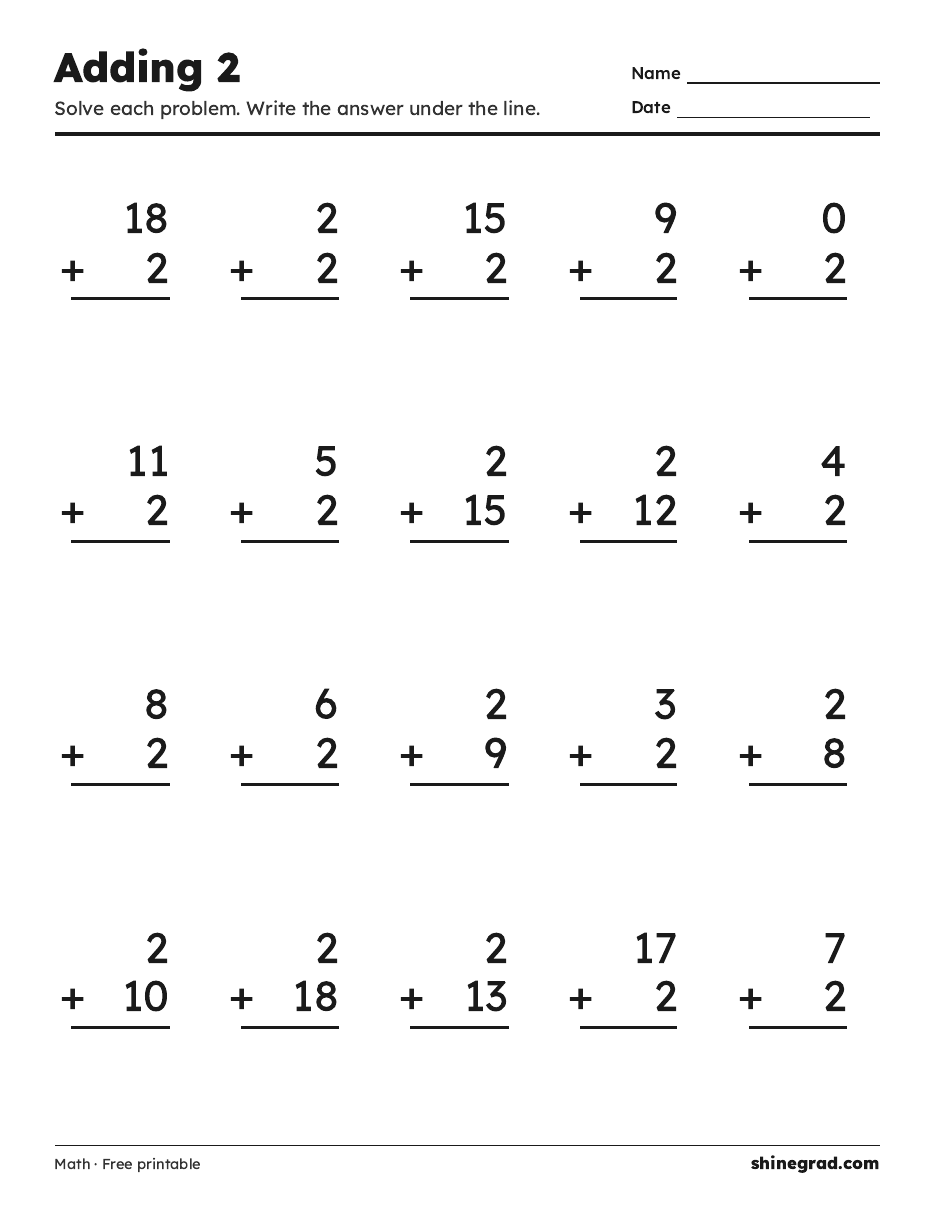
Print the Adding 1 sheet for the first days, then Adding 2. On the number line sheet, children start at the first number and hop. For 2 + 7, ask: "Could you start at 7 instead? Is it faster?"
Week 2Doubles
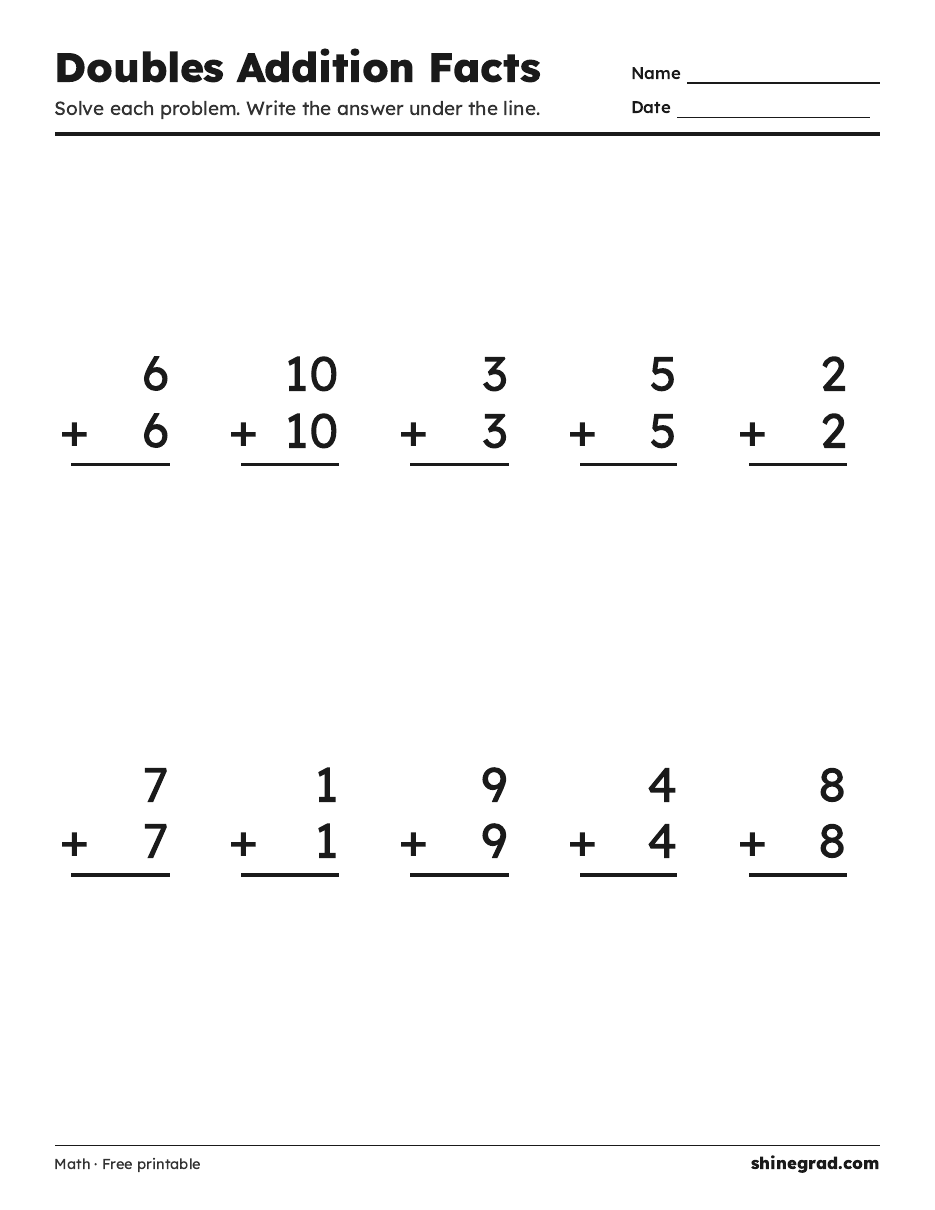
Doubles (3 + 3, 4 + 4, 5 + 5) are among the easiest facts to learn, because they have a picture to hang on: two hands make 5 + 5, an egg carton holds 6 + 6, a spider's legs are 4 + 4. Say the doubles as a chant at the warm-up. Small doubles often come quickly; doubles up to 10 + 10 may take a little longer. The sheet has 10 problems, so print it again on the other days; children can fold over yesterday's answers.
Week 3Doubles plus one
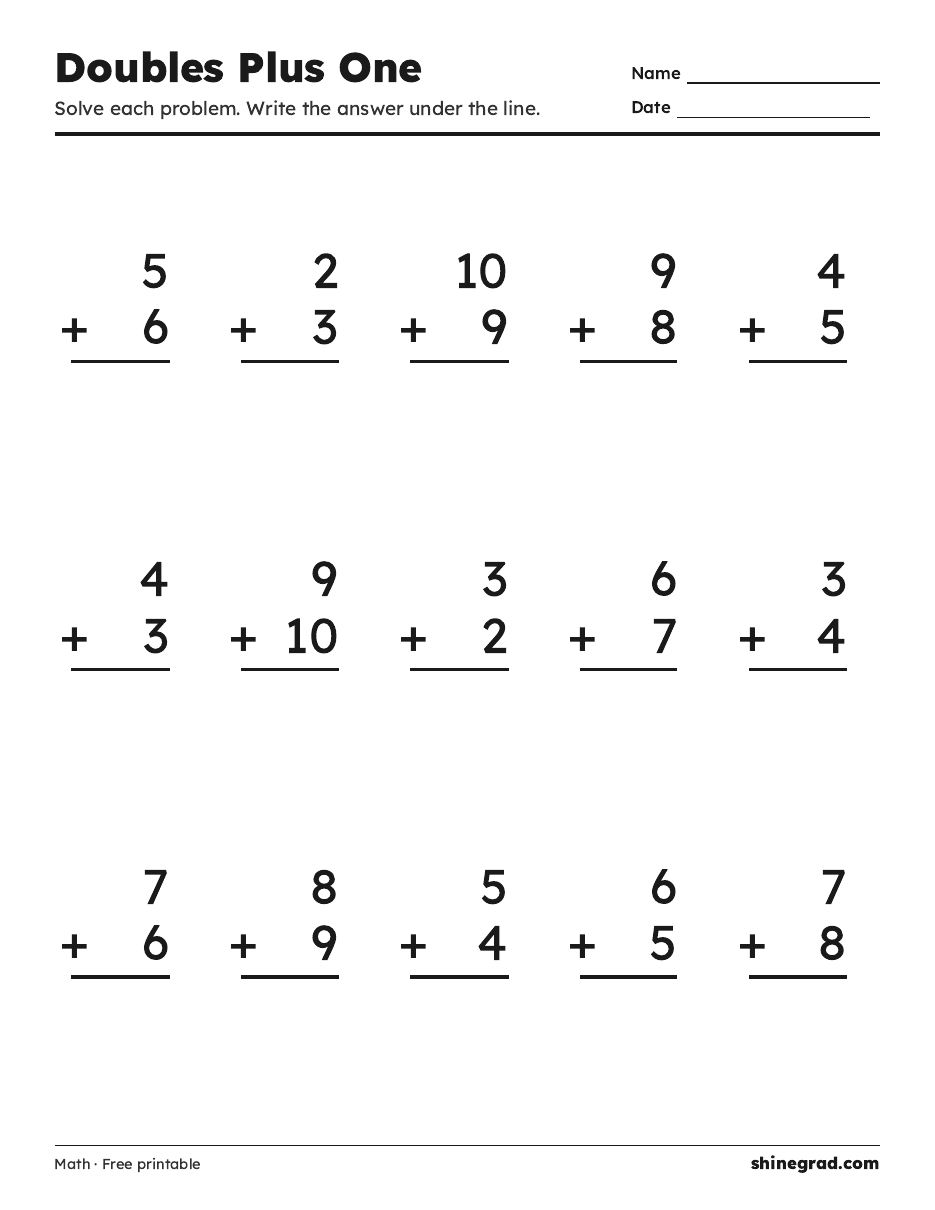
Now the doubles pay off. For 4 + 5, the child thinks: "4 + 4 is 8, and one more is 9." Ask "Which double helps?" every time. This one idea covers a whole new group of facts, and children feel smart when they use it. Print the sheet again later in the week for more practice.
Week 4Pairs that make 10, then mixed practice
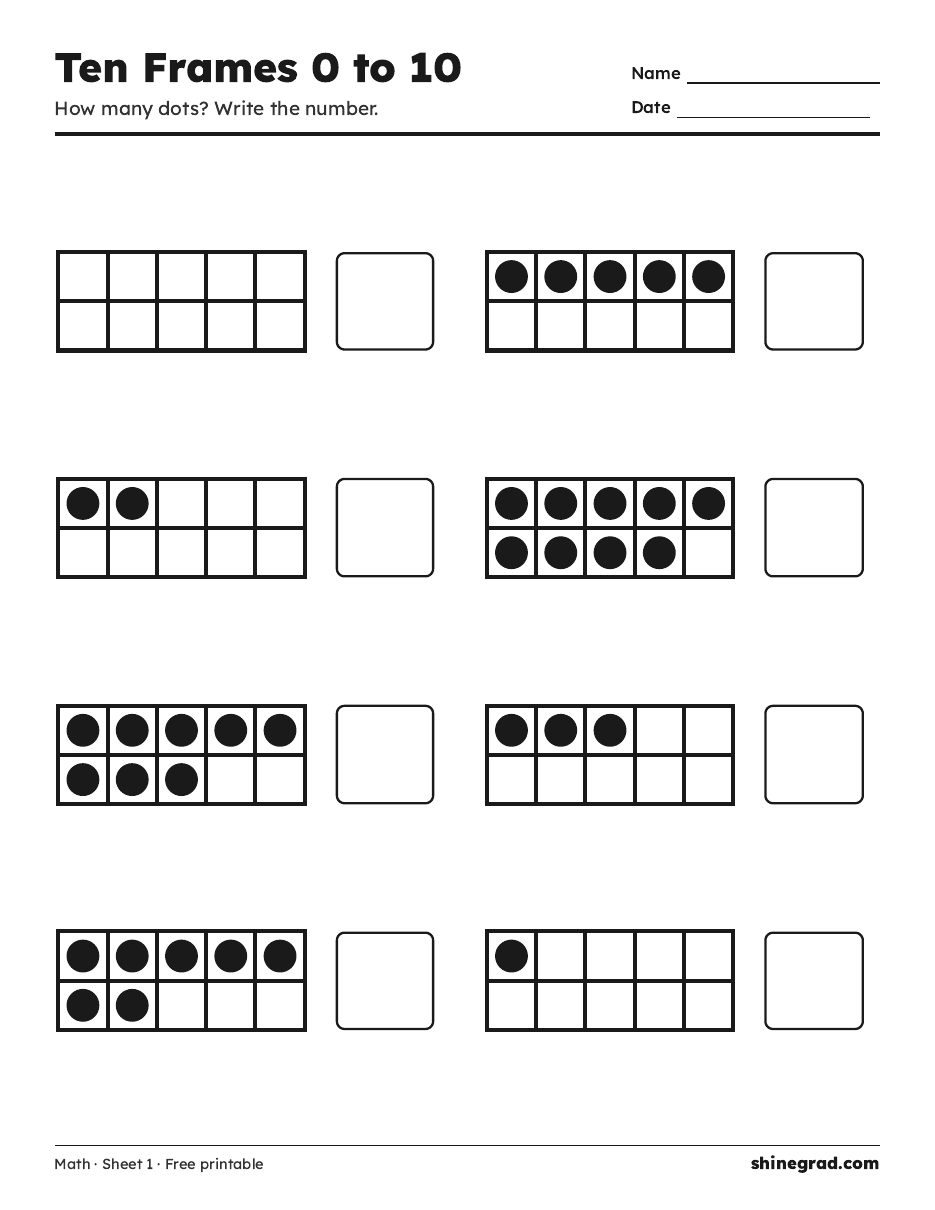
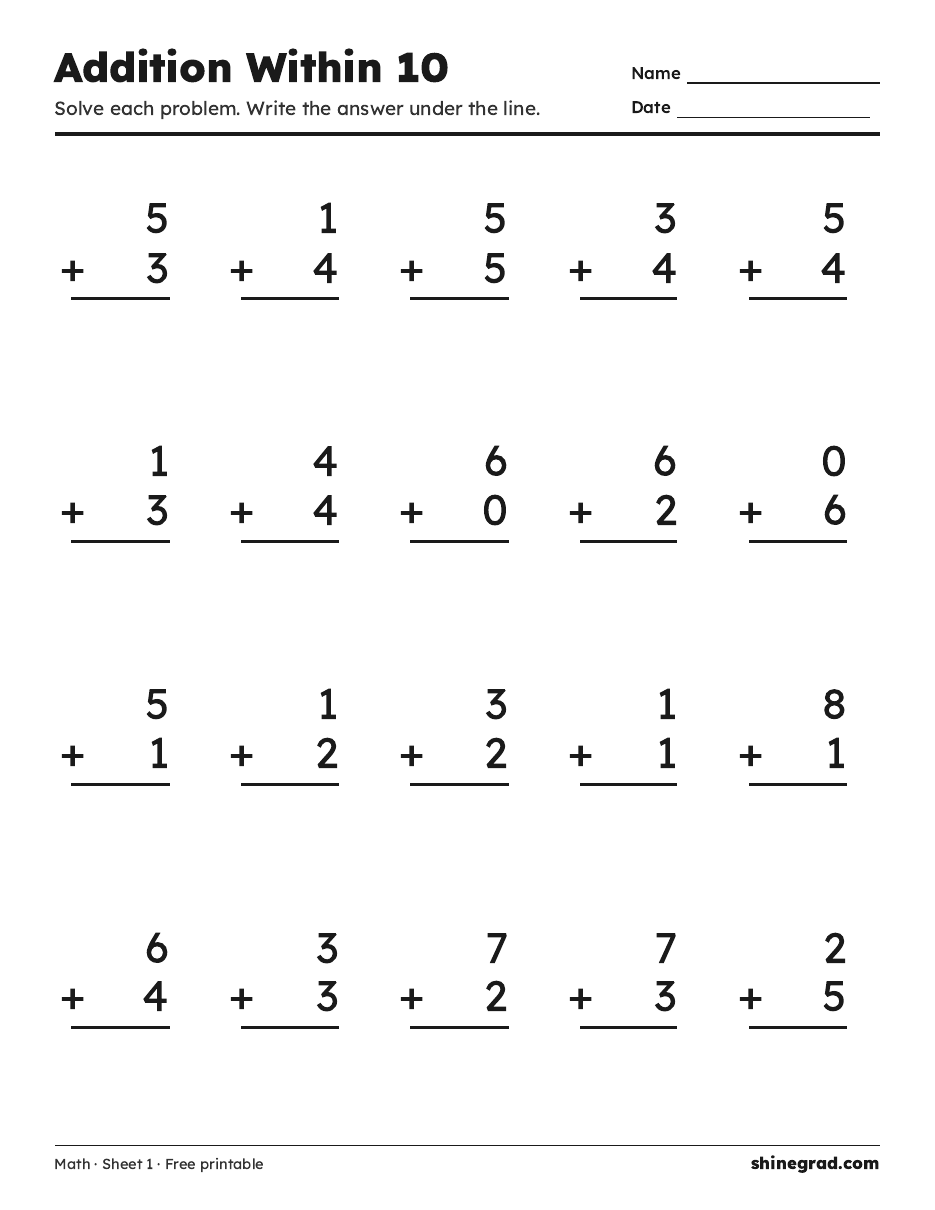
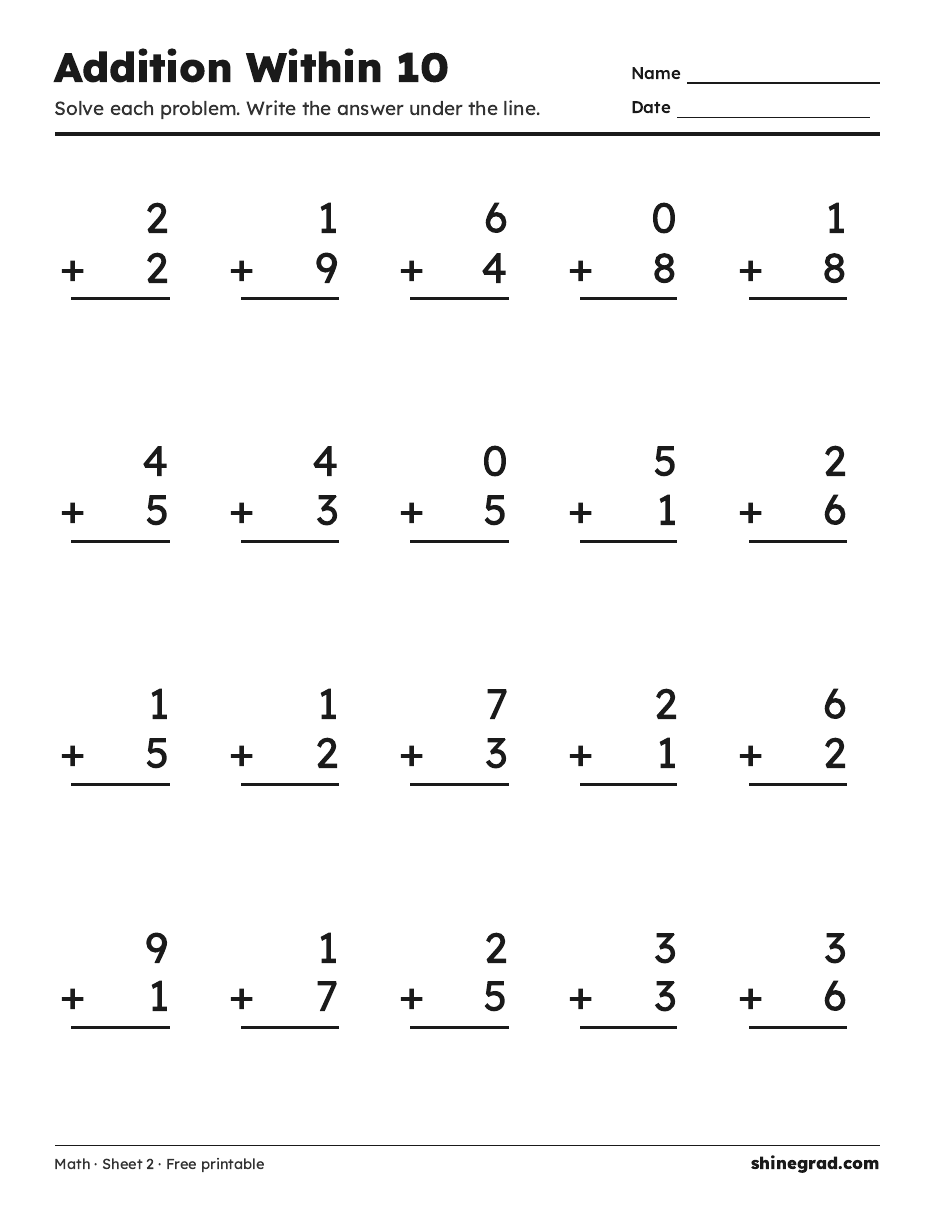
Use a ten frame to show the pairs that make 10. The ten frames sheet asks "How many dots?" For each frame, also ask out loud, "How many empty boxes?" Seven dots and three empty boxes means 7 + 3 = 10. Then move on to mixed facts within 10, where children choose the strategy themselves.
How to tell it is working
- The child starts from the bigger number instead of from one.
- The child explains an answer with a strategy: "double 6 is 12, so 6 + 7 is 13."
- Plus 1, plus 2 and doubles come back in about three seconds, without fingers.
- Fewer facts are circled at the check each day.
Fingers may still appear for the hardest facts. That is fine. Fingers are a tool; the goal is that they are no longer the only tool.
Mistakes to avoid
- Timing too early. Leave the timer out for the first weeks. Speed comes from knowing a strategy; pressure early on can make some children guess or freeze.
- Too many facts at once. A full mixed page on day one sends children straight back to counting from one. Keep to one group of facts per week.
- Banning fingers. Some children then count in secret, under the table. Give them a faster way instead, and in time most put the fingers down on their own.
- Skipping the "How did you know?" Saying the strategy out loud is what turns it into a habit.
Questions parents and teachers ask
At what age should children stop counting on fingers?
There is no single age, and many children still use fingers for some facts in kindergarten and first grade. US standards expect children to add fluently within 5 by the end of kindergarten and within 10 by the end of first grade, using strategies such as counting on and doubles for facts up to 20. By the end of second grade they should know all sums of two one-digit numbers from memory.
Should I use flash cards or worksheets?
Both can work. A worksheet gives every child practice at the same time and leaves a record you can check. Flash cards suit a quick warm-up. Whichever you use, keep to one group of facts at a time.
What comes after the 4 weeks?
Keep a short daily warm-up with mixed facts, then move to subtraction using the same ideas: subtracting 1 and 2 by counting back, and using doubles (if 6 + 6 is 12, then 12 - 6 is 6).